
Sex Offender Checks in Montgomery County
The Texas Public Sex Offender Registry is the main official search channel for Montgomery County. Texas Department of Public Safety, or DPS, receives registration data from the law-enforcement authority responsible for each registrant. The public can search at no charge. A county filter gives a broad local view, while a name search is better when the person is known. An address or map search is useful for checking the area around a home, school route, park, or other place important to a family's safety plan.
A Montgomery County registry result is different from an arrest record or a court docket. It reflects a duty created by a reportable offense under Texas law. It does not present every police contact, and it does not replace the court judgment behind the registration. Start with enough detail to separate people with similar names. Then read the status, registering authority, offense, address, and verification data together. For deeper context about the underlying prosecution, the county's criminal court case search explains the separate clerk systems.
The official registry image below shows the public entry point maintained by DPS. View the live Texas registry source before relying on any saved screen.
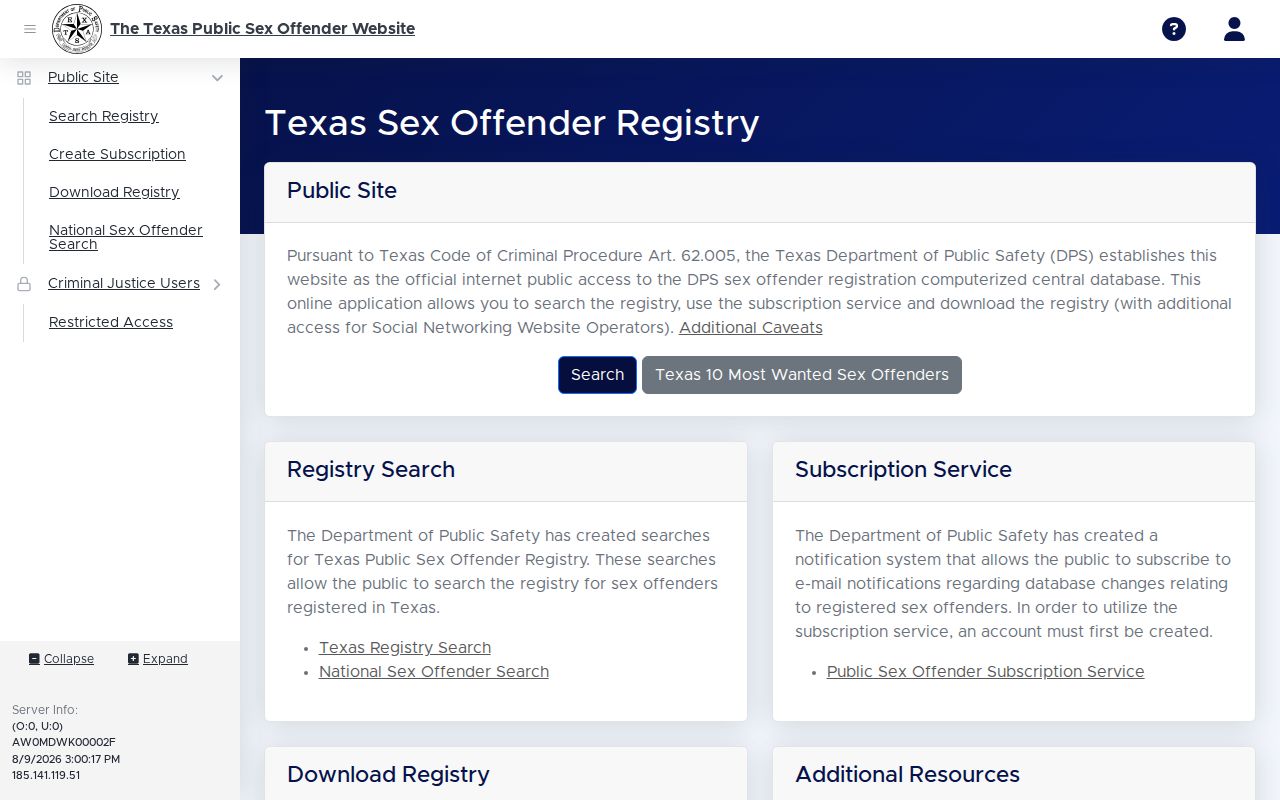
The live interface is the sound source for current Montgomery County registry status because copied results can become stale.
How to Search the Texas Public Sex Offender Registry
DPS offers name, address, and map routes in one public system. The best route depends on the question. Use a name when identity is the focus. Choose address or map controls when the location matters more. A county filter can widen the review beyond one city boundary, which is useful because Montgomery County includes incorporated cities and a large unincorporated area.
- Open the official DPS registry and review its conditions and current search instructions.
- Select Name, Address, or Map. Enter only the details that fit that mode.
- Choose Montgomery in the county control or use the live radius options to narrow a geographic search.
- Open a likely result and compare the full profile, status, registering authority, address, and offense details.
The controls documented during research are set out below. The interface can add quick-search options, so follow the labels shown live.
| Field Label | Type | Required | Notes |
|---|---|---|---|
| Search mode | Tabs | Yes | Name, Address, or Map |
| Last Name | Text | Name route | Use portal help for partial or exact behavior |
| First Name | Text | No | Narrows a name result |
| Address and City | Text or select | Address route | Enter a Texas street and city |
| ZIP Code | Text | No | Five digits |
| County | Select | No | Select Montgomery |
| Radius and Map/List | Select and controls | Route dependent | Use the distances and views offered live |
Montgomery County Registry Search Views
Name, address, and map searches answer different questions. A name result can locate a known registrant but may require careful identity matching. An address search starts from one place and can use the radius choices offered by the live portal. The map provides geographic context, while the list view makes it easier to compare result text. A Montgomery County filter is broader than a Conroe city search and can capture entries under a sheriff registration authority beyond city lines.
The DPS registry FAQ explains how Texas registration information is collected and released. The captured FAQ view below is a useful starting point, but the linked official text should control when policy language changes.
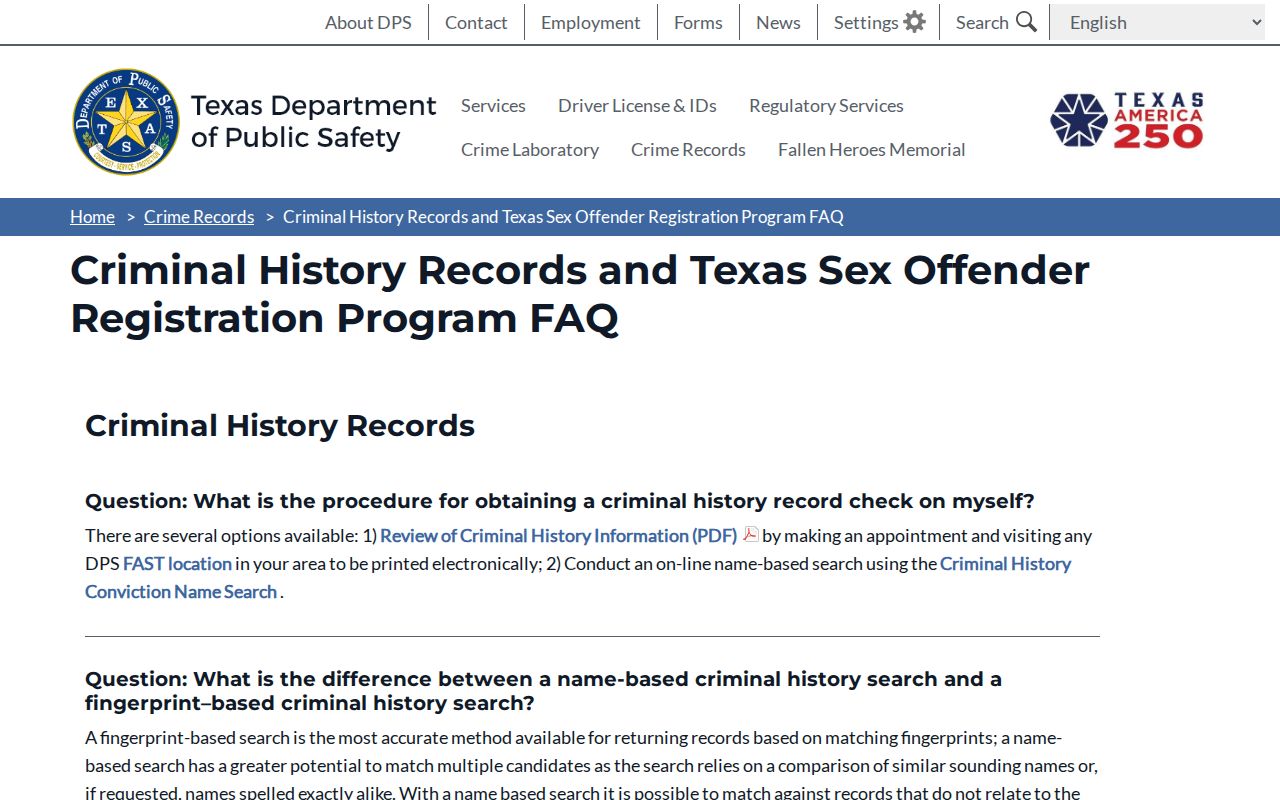
The FAQ helps a Montgomery County searcher distinguish public registry data from fields that Texas keeps confidential.
Inside a Registry Profile
A public profile combines identity, location, registration, and qualifying-offense data. Read the fields as a set. A photograph and physical description can aid identification, but an alias or similar name can still cause confusion. The registered address shows the location reported through the local authority, while the authority and verification fields help explain who handles updates. Offense and adjudication details provide the legal basis for registration.
| Name and Aliases | Primary name and other reported names used for identity matching |
|---|---|
| Photo and Description | Photograph, sex, race, height, weight, eye and hair color, and scars, marks, or tattoos |
| Registered Location | Address or geographic location released under Texas law |
| Offense Details | Offense description or statute, conviction or adjudication date, and victim age category |
| Risk Information | Texas risk level and status, which should not be converted into a federal tier |
| Registration Details | Registration authority, verification information, sentence or discharge context, and qualifying vehicle data |
A profile can change after a move or verification event. Confirm the live status and use the named registration authority for a correction question.
Montgomery County Registry Field Limits
Public access has firm limits. Texas does not expose a registrant's Social Security number, driver's-license number, phone numbers, online identifiers, or employer name, address, and phone through the public profile. DPS-added confidential information is also withheld. Victim identity is not a public registry field, and a juvenile court can order qualifying juvenile information kept from public display.
Those omissions matter when reading a Montgomery County sex offender profile. A blank field is not proof that the underlying agency never received information. It may reflect a statutory privacy line. The Texas Sex Offender Registration Program overview describes the program and public-notification framework. Its official page is shown below.
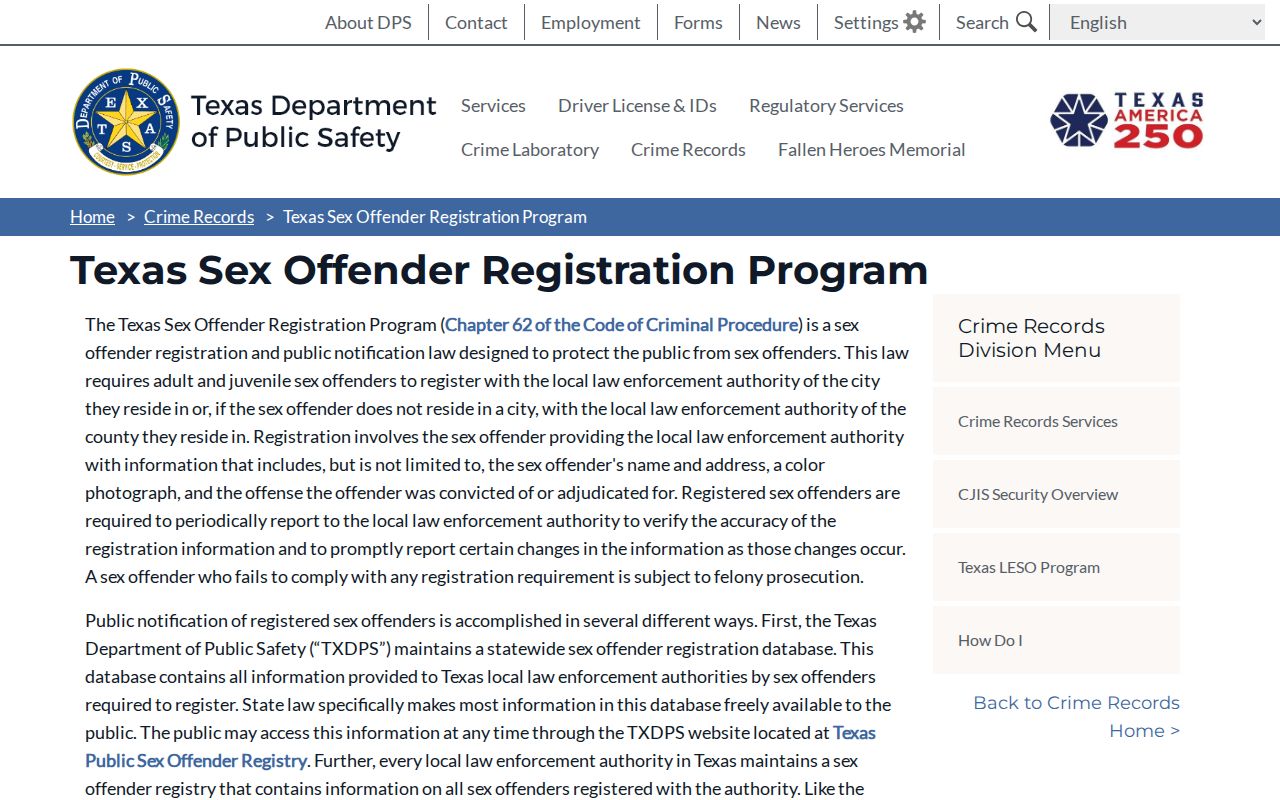
The program material supplies the legal context that a short Montgomery County result card cannot show by itself.
Texas Registration Levels and Requirements
Texas duration depends on the reportable offense and the governing dates, not on a simple three-tier shortcut. Many adult reportable offenses that do not require life registration run for ten years after discharge from incarceration, parole, or community supervision. Listed sexually violent and other qualifying offenses require lifetime registration. Exact offense and date rules are in Code of Criminal Procedure Chapter 62.
| Texas Category | Duration | Public Meaning |
|---|---|---|
| Adult reportable offense not requiring life | Generally 10 years after discharge from custody or supervision | Registration term is offense specific |
| Sexually violent or other listed lifetime offense | Lifetime | Chapter 62 controls the exact offense and date rule |
| Low, moderate, or high risk | Not itself a duration table | Texas risk assessment can affect notification |
| Juvenile registrant | Court and statute specific | A juvenile court may make the information nonpublic |
Registration began in Texas on September 1, 1991. Later provisions made it retroactive in defined cases tied to reportable conduct from September 1, 1970 and criminal-justice-system status on or after September 1, 1997. A profile and Chapter 62 are safer than assumptions based on an offense label alone.
Montgomery County DPS and NSOPW Layers
DPS is authoritative for Texas public registry information. The National Sex Offender Public Website, or NSOPW, adds a cross-state layer supplied through participating jurisdictions. It is useful when a person may have moved across a state line or when a search area spans more than Texas. Participation and update timing vary, so NSOPW supplements rather than replaces DPS and the Montgomery County registration authority.
The national search interface shown below demonstrates that wider scope. Open the current NSOPW search for its live jurisdiction coverage and conditions.
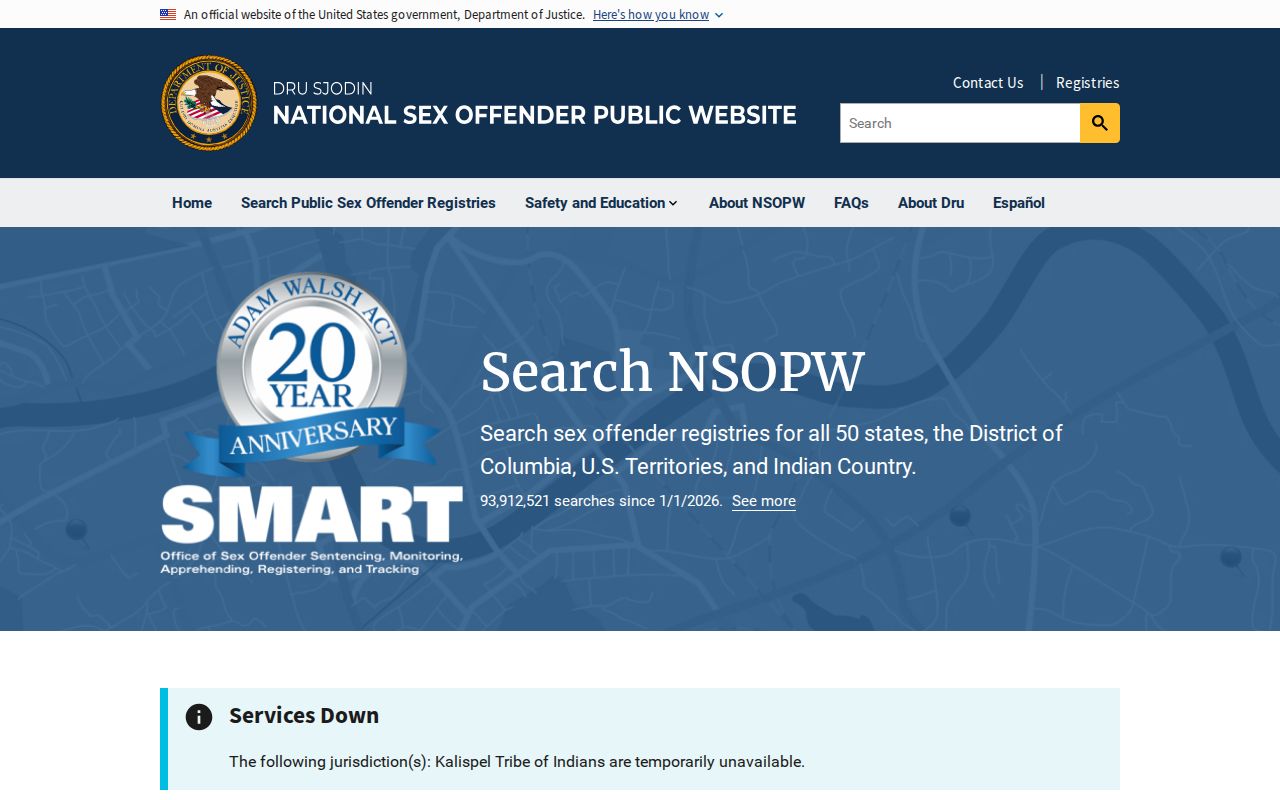
A careful search checks DPS first for Montgomery County and uses NSOPW when broader geographic coverage adds value.
Texas also offers registry exploration and most-wanted features through the Texas DPS mobile app. Use DPS's current app information because store listings and identifiers can change. High-risk community notice can include DPS postcards in English and Spanish to the immediate community when a qualifying person is released or moves. That notice is an added safety channel, not a full substitute for a live search.
Community Notification and Lawful Use
Registry information exists for public safety and community awareness. It can help a household learn which authority maintains an entry, review a reported location, and plan a calm response to a safety concern. High-risk notification rules may add a direct notice in some cases. They do not promise that each Montgomery County resident will receive a notice about every registrant nearby.
Use the information as published. Do not follow, contact, threaten, shame, or trespass against a listed person or anyone in that household. Never treat a map point as permission to confront someone. If the concern involves a current crime or immediate risk, use emergency services. For a status or address issue, use the registration authority or DPS channel.
Misuse Is Unlawful: Texas Code of Criminal Procedure Chapter 62 does not permit harassment, threats, vigilantism, trespass, unlawful discrimination, or any other crime based on registry information.
Montgomery County Registry Corrections and Reports
When a listed address seems wrong, first reopen the live profile and check its status, verification details, and named registration authority. A city police authority handles registrants inside that municipality. MCSO handles those outside city limits. Give the authority the profile details and the reason for the concern. The public should not test the address, seek private proof, or question people at the location.
For a Texas program question, contact the DPS Sex Offender Registration unit at 512-424-2800. Suspected noncompliance should go to the local registration authority. Emergencies go to 911. If a profile appears under the wrong person, the correction belongs with DPS and the registering authority because those agencies hold and edit registry data.
Note: Saved images and third-party copies may be old, so verify every Montgomery County registry detail on the official live profile.